The Normalization of Hormonal Suffering
Millions of women suffer from debilitating cramps, severe PMS, irregular cycles, and PCOS. For decades, the conventional medical response has been to prescribe oral contraceptives—essentially overriding the body's natural endocrine system with synthetic hormones. While this masks the symptoms, it ignores the underlying dysfunction.
Artava Dhatu: The Endocrine System in Ayurveda
Ayurveda views the female reproductive system (Artava Dhatu) as deeply interconnected with the nervous system (Majja Dhatu) and blood (Rakta). Hormonal imbalances are seen as a disruption of Apana Vata (the downward-moving energy governing menstruation) and excess Pitta (causing inflammation and heavy bleeding).
Botanical Interventions for the HPO Axis
The Hypothalamic-Pituitary-Ovarian (HPO) axis is the feedback loop that controls female hormones. Specific Ayurvedic phytoestrogens and adaptogens have been clinically proven to modulate this axis without shutting it down.
1. Shatavari (Asparagus racemosus)
The premier women's adaptogen. Shatavari contains steroidal saponins (shatavarins) that gently modulate estrogen receptors. Clinical studies indicate it supports follicular growth and ovulation in PCOS patients while reducing systemic stress.2. Ashoka (Saraca asoca)
The bark of the Ashoka tree contains tannins, catechins, and flavonoids that act directly on the uterine endometrium. It is exceptionally effective in treating menorrhagia (heavy bleeding) and dysmenorrhea (painful cramps).3. Lodhra (Symplocos racemosa)
Proven to lower elevated testosterone levels and regulate the LH/FSH ratio, making it a critical intervention for androgenic conditions like PCOS and hormonal acne.Nariharva: Comprehensive Endocrine Support
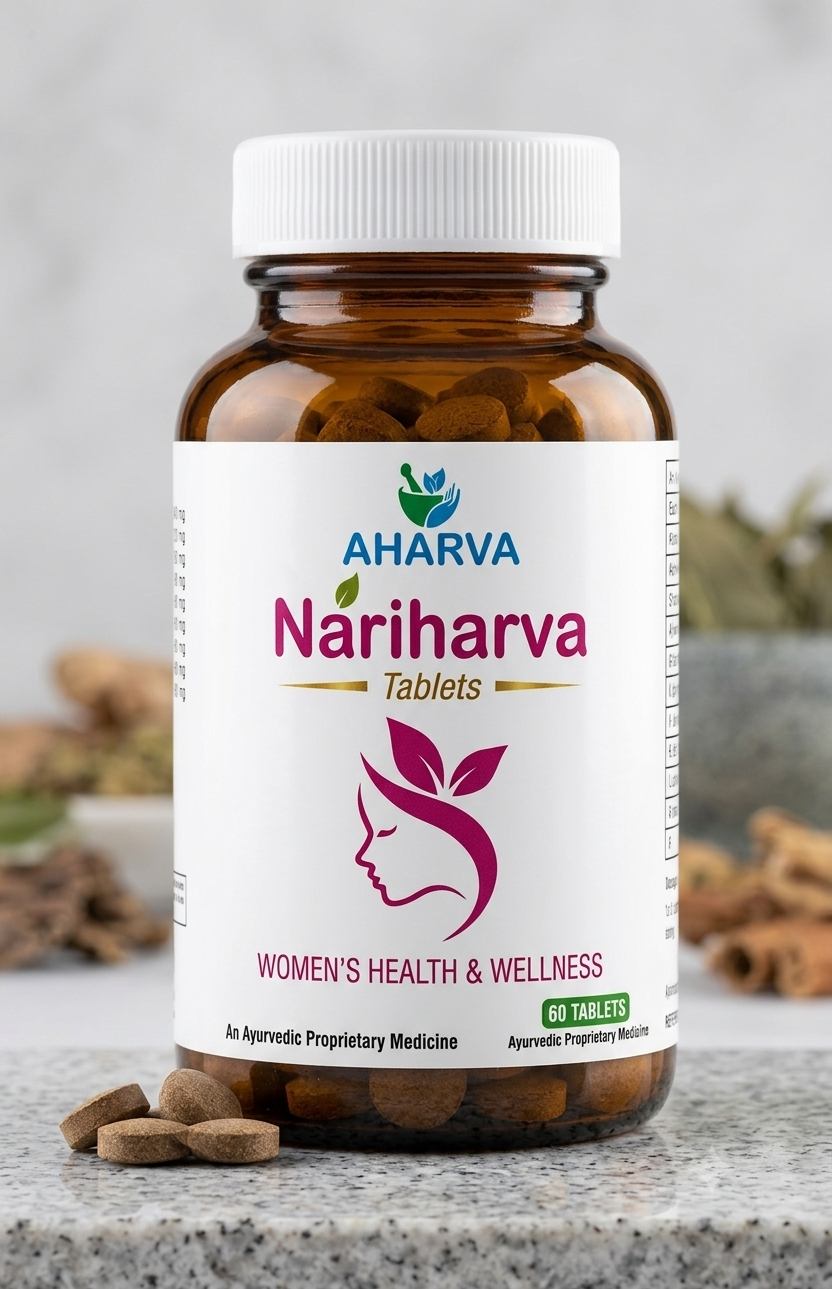
Nariharva Tablets were formulated to address the HPO axis comprehensively. By providing the body with the exact phytonutrients needed to synthesize and clear hormones efficiently, Nariharva helps the body remember its natural rhythm.
"We are not forcing the body to bleed or not bleed. We are nourishing the endocrine glands so they can regulate themselves. That is the fundamental difference between synthetic hormones and clinical Ayurveda." — Dr. Ananya Sharma
Conclusion
Hormonal chaos is common, but it is not normal. Through targeted botanical supplementation, women can reclaim their natural cycles and vitality.
Frequently Asked Questions
Q: How long does it take for Ayurvedic herbs to balance hormones? A: The endocrine system operates on a monthly cycle. Clinical improvements are typically observed after 3 full cycles (approximately 90 days) of consistent supplementation.
Q: Is Shatavari safe if I have estrogen dominance? A: Yes. Shatavari acts as a selective estrogen receptor modulator (SERM). It contains phytoestrogens that can bind to receptors, effectively blocking stronger, endogenous estrogens in cases of dominance, while providing a mild estrogenic effect in cases of deficiency.
Q: Can I take Nariharva for PCOS? A: Yes, the formulation specifically contains Lodhra and Kanchanar, which are clinically indicated for reducing cysts and normalizing androgen levels in PCOS.